Celina's Winters Are Mild, Until They Aren't
It's easy to assume a furnace in North Texas is a minor part of the house. Celina's winters are genuinely mild most of the season, and a lot of homeowners here go weeks at a time without running heat at all. But mild isn't the same as safe from real cold. Most winters bring multiple nights that drop below freezing, and every so often the region sees something more serious: an extended arctic blast that behaves nothing like a typical North Texas cold snap. The February 2021 Texas freeze is the clearest example. That event put sustained, multi-day extreme cold on homes and heating systems that most owners assumed would rarely be tested that hard, and it exposed just how many furnaces in this region weren't in the condition their owners believed.
How a gas furnace moves heated air through supply ductwork and pulls return air back in
That's the real case for furnace repair in a place like Celina. It's not about preparing for a brutal winter every year. It's about making sure the furnace works on the handful of nights a year when it's the only thing standing between your family and a genuinely cold house, and about not finding out it doesn't work in the middle of that stretch. A fall maintenance check before the first real cold front is the most reliable way to catch a fault like this before it becomes a no-heat call.
A System You Rarely Think About Until You Need It
Furnaces in this climate live a strange life. They're built to handle sustained winter demand, but here they mostly sit unused for ten months out of the year and then get asked to perform reliably during short, intense bursts of real cold. That pattern, more than raw age alone, is behind a lot of the heating repair calls we see in Celina, and it's worth understanding before you assume your furnace is fine just because it hasn't needed attention yet.
Preston Hills and Twelve Oaks: Furnaces Old Enough to Need Real Repair
Not every furnace issue in Celina is a new-construction commissioning problem. In established neighborhoods like Preston Hills and Twelve Oaks, where a lot of homes were built before 2015, furnace systems are old enough now that they're moving past routine tune-ups and into genuine repair territory: worn igniters, aging control boards, blower motors that are starting to strain, and heat exchangers that warrant a real inspection rather than a quick glance.
This is a different kind of service call than what shows up in Celina's newer subdivisions, where heating issues more often trace back to a system that was never quite dialed in correctly after installation. In Preston Hills and Twelve Oaks, the equipment was likely installed correctly to begin with. What's changed is that a decade or more of intermittent use, Texas humidity, and the occasional hard freeze has worn down components that were never going to last forever. If your home is in one of these neighborhoods and your furnace hasn't been looked at in years, age alone is a reasonable reason to have it checked before the next cold snap, not just an active problem.
Why Furnaces That Barely Run Still Break Down
It seems counterintuitive that a furnace used only a few weeks a year would need more attention than one running daily through a long winter, but disuse creates its own failure modes. A pilot light or electronic ignition system that isn't cycling regularly is more likely to develop a fault that only shows up the next time it's asked to fire. Dampers that haven't moved in months can stick in place, restricting airflow to parts of the house in a way nobody notices until the furnace is running. Dust, debris, and even the occasional insect or rodent nest can build up in a system that goes long stretches without operating, none of which announces itself until the first cold night of the season, when the furnace either doesn't ignite at all or runs poorly.
The Cost of Finding Out at the Wrong Time
The practical problem with all of this is timing. A furnace that's developed one of these issues over the summer and fall doesn't reveal it until you need heat, which in Celina often means the first real cold front or, worse, an event like the February 2021 freeze. Discovering an ignition failure or a stuck damper in the middle of a hard freeze is a much worse experience than catching it during a routine fall check, and it's exactly the kind of failure that a system running daily through a long winter would likely have revealed months earlier.
Common Furnace Repair Issues in Celina Homes
Ignition and Pilot Problems
Whether a furnace uses a standing pilot or electronic ignition, components that sit idle for months are more prone to failing the first time they're asked to fire after a long break. This is one of the most common no-heat calls we see, and it's often resolved without needing a full component replacement if it's caught early.
Control Board and Thermostat Issues
Furnace control boards and thermostats can develop faults during long idle periods, sometimes from humidity, sometimes simply from age. A furnace that seems to have power but won't respond to a thermostat call for heat often points here. If the thermostat itself is the aging part, a smart thermostat installation configured for your actual system is worth considering alongside the repair.
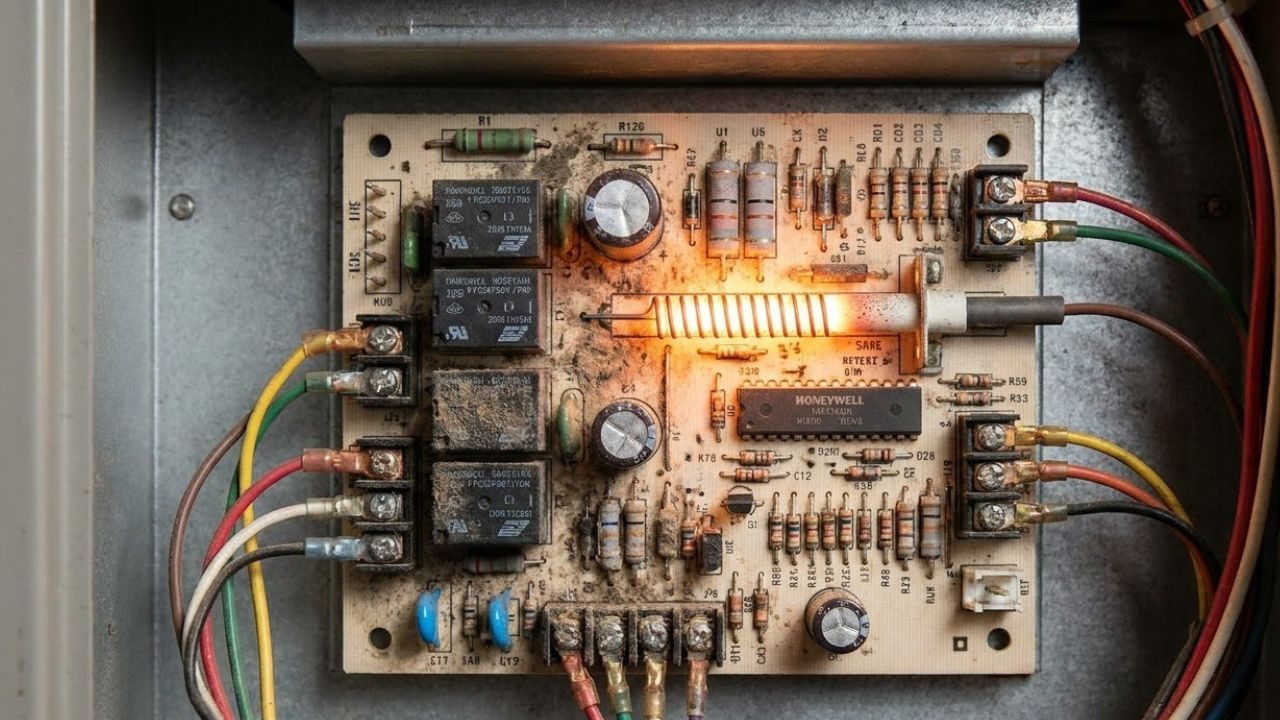
A furnace control board and hot surface igniter, the kind of components a fall check catches before they fail on a cold night
Blower Motor Wear
Blower motors that have logged a decade or more of intermittent use, especially in older Preston Hills and Twelve Oaks homes, can develop bearing wear or start pulling more current than they should, showing up as unusual noise or weaker airflow at the vents.
Heat Exchanger Concerns
In older furnaces, a cracked or corroded heat exchanger is a genuine safety issue, since it can allow combustion byproducts, including carbon monoxide, into the home's air supply. This is one of the most important reasons not to skip inspection on an aging system, and it's not something to diagnose without proper equipment and training.
Licensed Furnace Repair in Celina, TX
Like the rest of HVAC work in Texas, furnace repair requires a current Air Conditioning and Refrigeration Contractor (ACR) license issued by the Texas Department of Licensing and Regulation (TDLR), since the work touches gas connections, combustion safety, and electrical components where mistakes carry real consequences. Confirming that license before hiring is a simple way to know you're dealing with someone properly trained for the job.